 By todaynetworths@gmail.com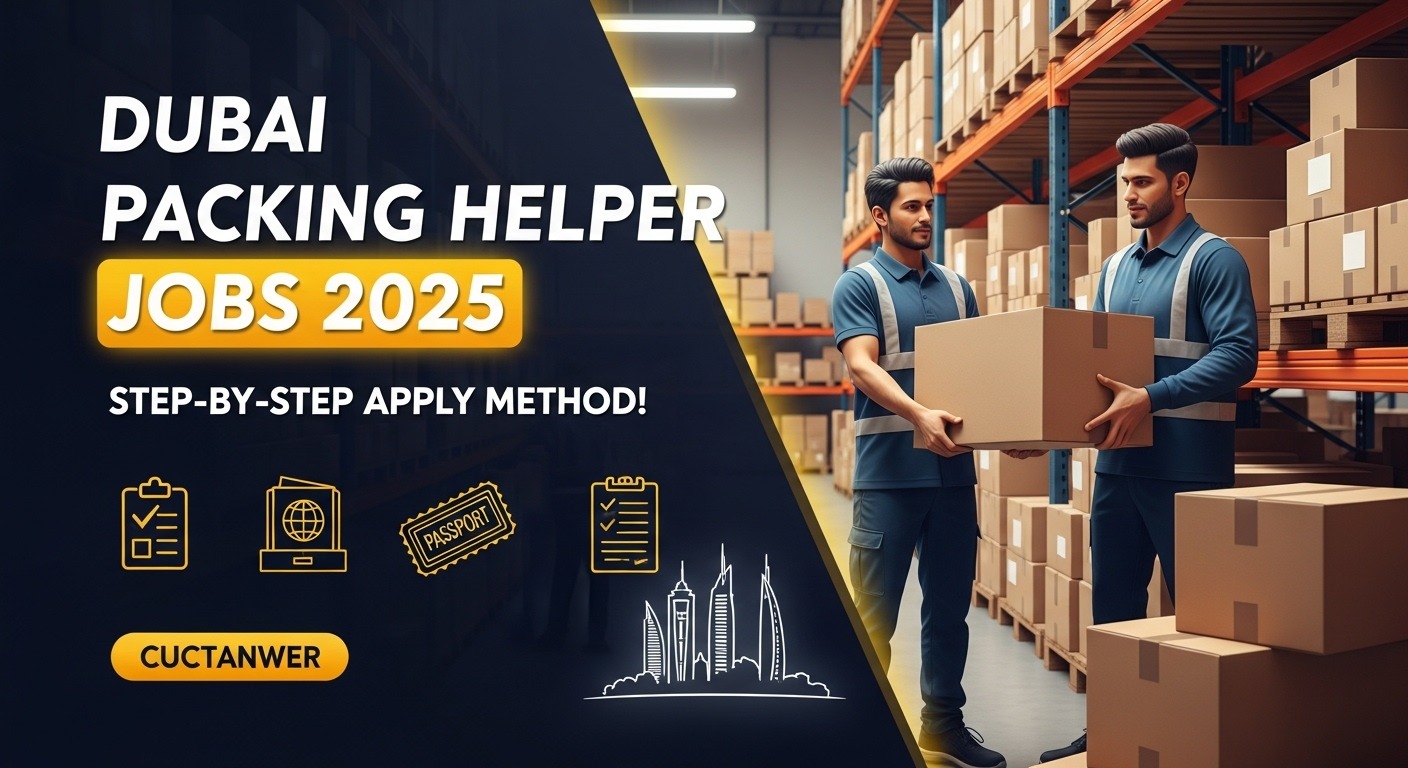
Thinking about working as a packing/helper in Dubai? You’re not alone. Many people arrive with the same mix of excitement and worry: Dubai promises steady work, but the application and visa steps can feel like a maze. Below is a warm, practical, step-by-step guide that blends real worker voices, job-market facts, and hands-on tips so you can apply like a pro — and avoid the common traps—Dubai Packing Helper Jobs .
I pulled this together from job listings, official UAE guidance, and dozens of worker reviews and recruiter notes — so it’s grounded in what’s actually happening on the ground, not fluffy advice. Let’s go.
Quick snapshot — what this article covers
- Who hires packing helpers in Dubai (warehouses, food companies, ecommerce)
- Typical pay and benefits (real ranges from job sites) Indeed+1
- Step-by-step application + visa process (what employers do and what you’ll need). U.AE+1
- Practical checklist, small table of top job sites, worker voices, and negotiation tips.
Why packing helper jobs are common in Dubai — and what “packing helper” really means
“Packing helper” is a flexible role. You might be packing fresh produce in a market, labeling boxes in a logistics warehouse, folding and packaging garments in a factory, or preparing online orders for delivery. The work is often physically demanding — lots of standing, lifting and repetitive tasks — but many employers offer predictable shifts and (sometimes) food or accommodation. You’ll find openings across Dubai’s industrial areas, Free Zones, and supermarket supply chains. Indeed+1
A few workers’ realities summed up in one short composite quote (from multiple worker reviews):
“Steady shifts, long hours, small pay — accommodation included.” — composite from site reviews and forum posts. Glassdoor+1
Real numbers: typical pay, benefits, and what to expect
Salary listings vary. On major job sites the monthly pay for packing/packer roles is commonly reported between AED 1,500–AED 3,000 for entry-level positions (sometimes higher for specialized packers or roles that include driving). Official crowd-sourced salary pages list averages around ~AED 2,000 per month for packer roles in Dubai. Keep in mind: sometimes accommodation, transport, and food are included — sometimes they are not. Indeed+1
What the numbers mean in practice
- AED 1,500–1,800: Often basic helper jobs; employer-provided accommodation likely; overtime pay varies.
- AED 2,000–2,500: More stable warehouse roles or private companies with formal contracts.
- AED 3,000+: Supervisor roles, experienced packers, or combined roles (driver+packer). Glassdoor+1
A tiny table for clarity — where to look and what to expect
| Job source | Typical salary range | Best for |
| Indeed / LinkedIn / NaukriGulf | AED 1,500–3,000 | Quick applications, many listings. Indeed+1 |
| Company websites (supermarkets, logistics) | AED 1,800–3,500 | More formal contracts, sometimes better benefits. |
| Recruitment agencies / Jooble | AED 1,500–2,800 | Fast processing, agencies may charge fees (watch out). Jooble |
Step-by-step: How to apply (simple, practical method)
Below is a battle-tested sequence. Think of it as your application roadmap.
Step 1 — Get your documents ready
Most employers will ask for:
- Passport scan (valid 6+ months)
- Passport-size photos
- CV/resume (short, 1 page — highlight physical work, any forklift/warehouse experience)
- Reference letters or past contracts (if you have them)
- Police clearance / any required certificates (depends on nationality and employer)
Tip: Keep both digital (PDF) and printed copies ready. When a recruiter calls you, they often want documents immediately. Al Saqi Recruitment Group
Step 2 — Search with purpose
Start with these sources:
- Indeed, LinkedIn, NaukriGulf, Jooble — filter by “Dubai” and keywords “packer,” “packing helper,” “warehouse helper.” Indeed+2Naukrigulf+2
- Go to company careers pages (supermarkets, cold stores, FMCG companies).
- If you’re outside UAE, check agencies that specifically advertise visa sponsorship — be cautious with fees.
Step 3 — Tailor your CV (5 minutes that pay)
- First line: “Packing / Warehouse Helper — X years experience (if any) — Available immediately”
- Bullet points: “Able to lift 25 kg, experienced with order picking, palletizing, labeling”
- Languages (English/Arabic/Urdu/Hindi) are a plus — list them.
Step 4 — Apply and follow up
- Apply through the portal, but also WhatsApp the recruiter if a number is provided (many small companies prefer WhatsApp).
- After applying, send a polite follow-up message 24–48 hours later: short, ask if they need docs. Recruiters often respond faster to direct messages.
Step 5 — Interviews & tests
- Expect short in-person interviews or on-site trials: basic questions about availability and a quick physical test (lifting, packing demo).
- Wear clean clothes and arrive 10–15 minutes early. Bring ID and your CV.
Step 6 — Job offer, contract and probation
- Read the contract: salary, working hours, overtime rate, accommodation, probation period. If something is verbal, ask for it in writing.
- Typical probation is 1–3 months. Confirm who pays for medical and Emirates ID processing.
Step 7 — Medical, entry permit, residency visa (employer handles most)
Hiring companies usually process your work permit and entry visa. The general flow (employer-led):
- Employer issues offer and submits initial work permit.
- You travel on an entry permit (if hiring from abroad).
- Medical fitness test and Emirates ID application in UAE.
- Residency visa stamped in passport, and work permit/labour contract finalized. U.AE+1
Official visa and work permit notes (what the law says)
The UAE has clear rules: to work legally you need a valid work permit/residency visa issued through your employer. The government’s job/permitting pages outline the process for private-sector work permits and residency steps — check the official u.ae work permit guidance and MOHRE pages for domestic worker rules if that applies. These pages are the authoritative source for timing, age limits (18+), and document lists. U.AE+1
Cost traps and red flags — watch out
Nobody likes nightmares in paperwork. Here are things that should make you pause:
- Any employer or agency demanding large upfront “placement” fees before seeing a contract. Recruiters sometimes charge admin fees — but fees for visa issuance or promises should be transparent and lawful.
- No written contract or reluctance to put salary/benefits in writing.
- Vague accommodation promises — ask for details (single/shared room, location).
- Unusually low pay for long hours — compare similar listings on job sites.
Worker voices — real impressions (composite)
I compiled short, anonymized impressions from public job reviews and forum posts to give you a feel for day-to-day life:
“The first month is the toughest — long shifts but you learn the rhythm. Overtime pays, but sometimes it’s delayed.” — composite from worker reviews. Glassdoor+1
“Agency placed me quickly, but I lost one week to paperwork. Make sure the agent gives copies of everything.” — composite note from job forum summaries. Jooble
These aren’t quotes from a single person — they’re condensed from multiple sources so you get the honest, aggregated picture.
Negotiation & rights — how to protect yourself
You have rights under UAE employment law. Practical steps:
- Ask for the salary breakup: base pay, housing, transport, and overtime rates.
- Confirm working hours and weekly day off. Official pages explain the minimum standards for private-sector contracts (employer must register your permit). U.AE
- Keep copies of every document you sign and get wage payment receipts (bank transfer proof is best).
Quick tips (checkmark bullets):
- Always get the job offer and contract in writing.
- Ask whether accommodation is private or shared, and who pays utilities.
- Request a timeline for visa, medical, and Emirates ID processing.
- If unsure, ask the employer to point you to the official MOHRE or u.ae guidance.
Packing helper day-to-day — what your first week may look like
Imagine your first week:
- Day 1: Induction, safety brief, and a quick packing demo.
- Day 2–3: Learning the packing flow — where materials are, how to tape boxes, basic labelling.
- Day 4–7: Fixed shift pattern, possibly assigned to a section. You’ll feel tired but useful — and start learning how to speed up without compromising quality.
Practical on-the-job tips:
- Use knee support if you lift frequently.
- Hydrate — Dubai heat is real near outdoor areas or non-air-conditioned warehouses.
- Ask for a clear task list each shift to avoid scope creep.
After you accept: settling in and building for the future
- Save copies of payslips and your contract.
- Ask HR about overtime rules and how payment is processed.
- Learn basic Arabic phrases — small kindnesses go a long way and can improve relations with supervisors.
- If you want to move up: express interest in forklift training, inventory control, or shift supervisor roles. Companies promote internally often. (Tip: these roles pay considerably more.)
Short FAQ — fast answers
Q: Can I apply from outside the UAE?
A: Yes. Employers and agencies can issue entry permits for hires abroad. Make sure you have the offer and entry permit details before traveling. Al Saqi Recruitment Group
Q: Who arranges the visa?
A: The employer usually handles the work permit and residency visa as part of hiring (they apply to MOHRE/u.ae). Confirm who pays application fees. U.AE
Q: Are recruitment agencies safe?
A: Many are legitimate, but verify fees, read reviews, and avoid agencies demanding large cash payments before a contract. Use known portals (Indeed/LinkedIn) or company career pages when possible. Indeed+1
Final checklist — apply-ready in 10 minutes
- Passport photo & scan (valid 6+ months)
- 2–4 passport photos (digital)
- One-page CV tailored to packing/warehouse work
- Short list of references or previous employer contacts (if available)
- WhatsApp number + email ready for recruiters
- Clear understanding of the salary + accommodation offer
Parting thoughts — honest, friendly guidance
Packing helper jobs in Dubai are a practical route to steady income and possible career growth in logistics or operations. The process can be quick — but it pays to be careful: verify offers, read contracts, and protect your documents. Use reputable job portals, confirm timelines with employers, and keep copies of everything.
If you’d like, I can:
- Draft a short, 1-page CV template tailored for packing/helper roles.
- Find and list current active job postings (I can run a fresh search and extract live links).
- Prepare a message template you can send to recruiters on WhatsApp or LinkedIn.
Which one would you like next?
Selected sources & where to check official steps and live jobs
(Use these to verify policies or browse current vacancies): u.ae official work permit guidance; MOHRE domestic worker/work permit pages; Indeed, Glassdoor, NaukriGulf, Jooble for live job listings and salary snapshots. Naukrigulf+4U.AE+4mohre.gov.ae+4
Related Posts: